NAD+ and heart health: the unfinished case
The mouse result is dramatic. The human story depends on quieter measurements—and on what those measurements cannot settle.
Five days. Every treated mouse survived.
Start with the most arresting result in the NAD+ heart health record. In Zhang and colleagues’ pressure-overload experiment, NMN preserved heart function in mice after an operation that strained the heart. The treated mice had 100% survival at five days. Many untreated mice died.
The study gave NMN at 500 mg/kg/day by intraperitoneal injection, into the abdominal cavity. That is an animal experiment's amount and route. It cannot be translated here into a human pill amount. Related work in neonatal rat heart cells was also preclinical.
I won’t lend that survival figure to a claim about a human heart. It is too interesting to dismiss and too specific to borrow. The human studies below are about different populations, different interventions and different measurements.
Heart failure: blood changed, but the clinical verdict did not arrive
The NR safety and tolerability study in reduced-ejection-fraction heart failure describes hearts that do not pump well. NR at 1000 mg twice daily for 21 days raised whole-blood NAD+ approximately 2-fold and reduced pro-inflammatory cytokine production in peripheral blood mononuclear cells. Cytokines are signals used by immune cells; here the measurement concerned cells in blood. That regimen was specific to the research participants.
I expected a result about the working heart; this paper takes the measurements to blood immune cells. Stronger pumping, easier breathing and longer survival still require their own human evidence.
NAD+ reaches the blood in this result. My open question concerns the functioning heart: can these laboratory changes be connected to a benefit a person actually experiences? The short safety record does not make that connection.
Blood pressure gives the argument something tangible
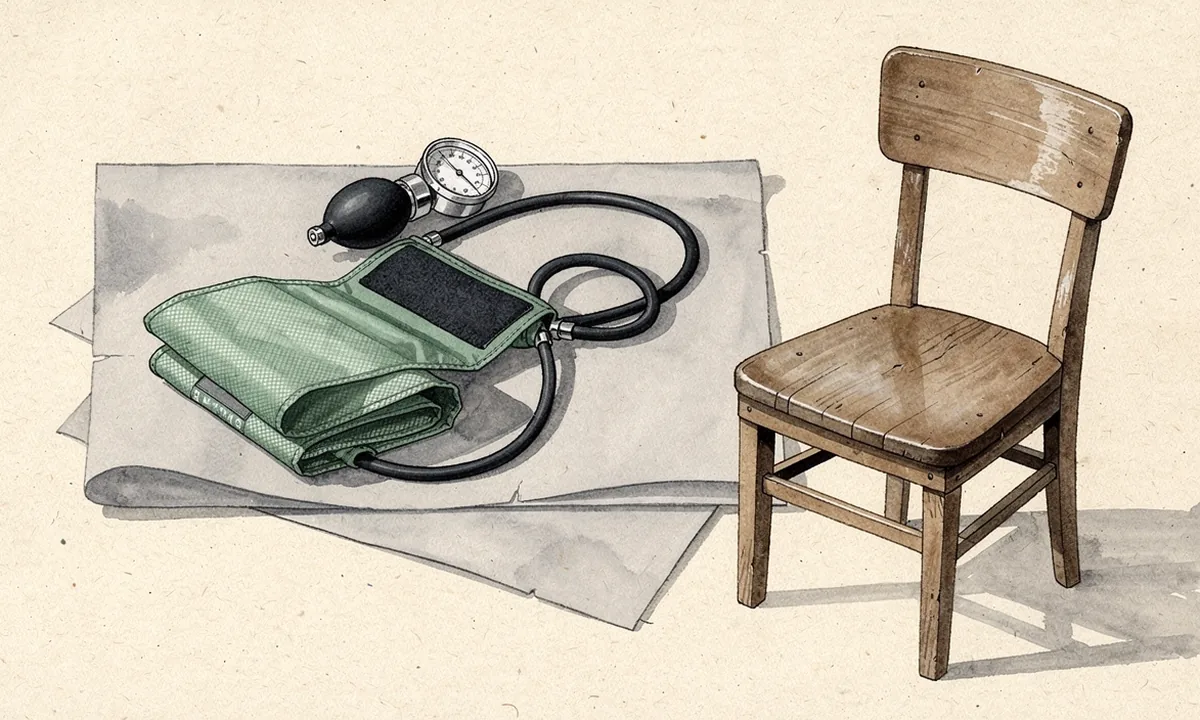
The NR blood-pressure and arterial-stiffness paper concerns healthy middle-aged and older adults, with the clearest changes among those starting with above-normal blood pressure. The reported intervention was 500 mg twice daily, or 1000 mg/day, for six weeks. Systolic pressure, the top number, and stiffness in large arteries fell.
These are more recognisable cardiovascular measures than a metabolite level. Still, the work does not establish that NR prevented a stroke or heart attack. Nor does it make an NAD+ drip equivalent to an oral NR intervention.
I rate a blood-pressure result above another metabolite change. The measured outcome is the attraction. Follow-up would need to establish how lasting and consequential that pressure change is.
Does NAD increase blood pressure or heart rate?
In the oral NR group studied, systolic pressure fell. Individual responses to other forms remain unresolved. The heart-failure work likewise measured tolerability and blood changes; the question of increased heart rate remains unsettled by this paper.
The audited studies on this page do not supply a firm answer about an increase in heart rate. A chest symptom during an infusion and a resting heart-rate result would also be different observations. Combining them under the word ‘heart’ would hide the question rather than answer it.
An NAD injection arrives with thinner evidence
A shot can put NAD+ into muscle; an IV infusion delivers it into the bloodstream. Each compounded NAD+ preparation has no FDA approval. The published work on IV NAD+ is much thinner than the oral precursor trials, with small pilot and retrospective reports and limited controlled outcome evidence. The 2025 review of the human evidence does not establish a broad health benefit from the rise in NAD-related blood measurements.
A compounded NAD+ injection was recalled because of elevated bacterial endotoxin. FDA assigned the recall to Class I. The recall concerns manufacturing quality; it gives the preparation a documented safety problem alongside the unresolved efficacy. No best time or validated injection schedule is established here.
Direct delivery leaves me unconvinced as an answer to the clinical question. The study-amounts page examines why the rapid plasma clearance reported in pilot work complicates that intuition, and the safety page distinguishes infusion symptoms from the oral trial record.